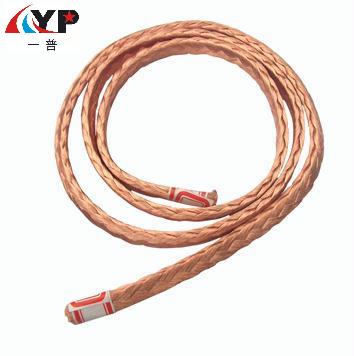
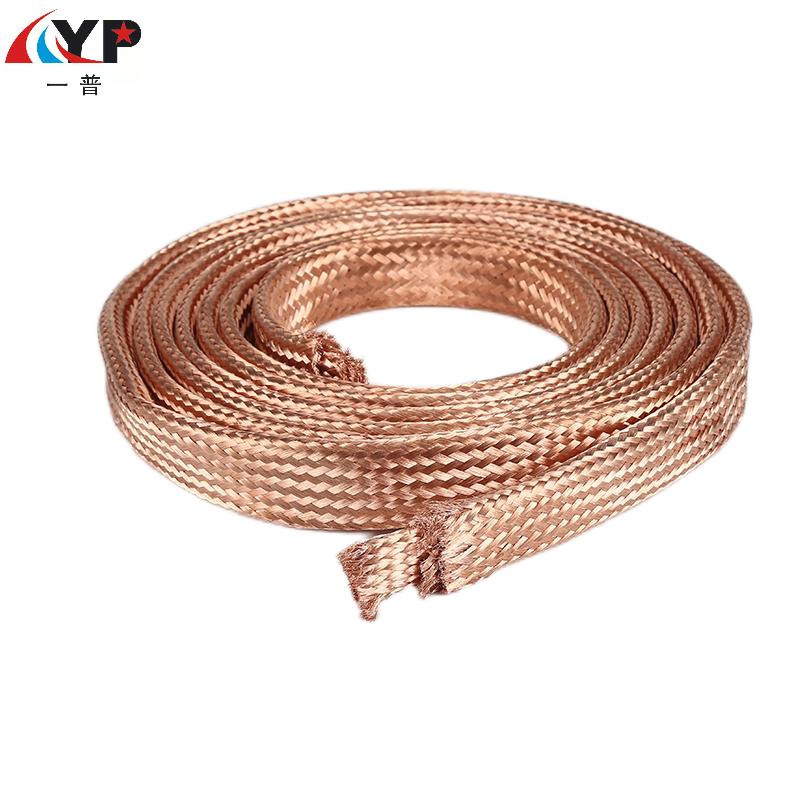
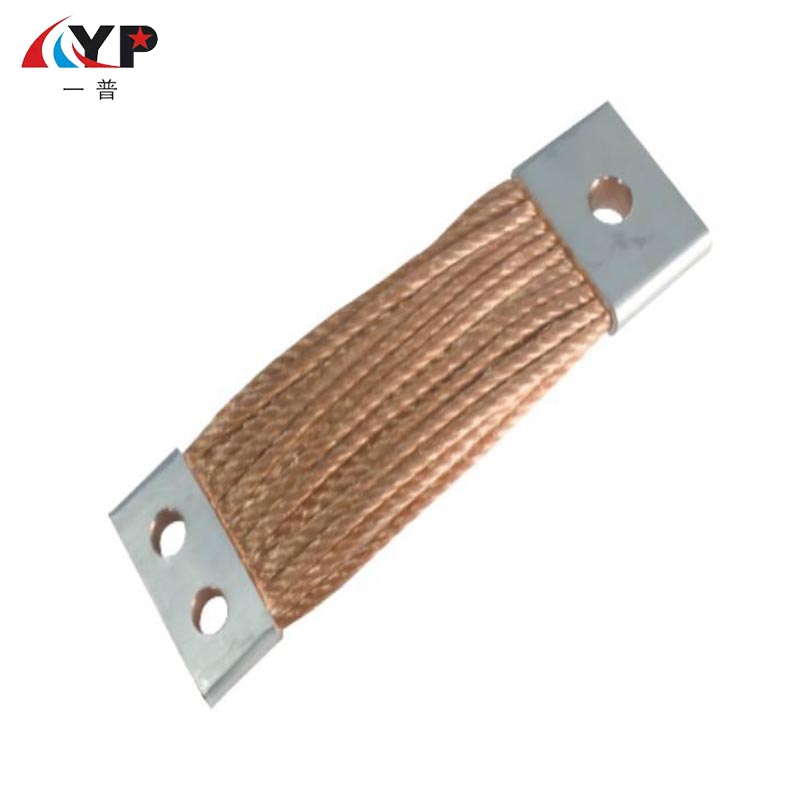
The key to choosing flat copper braided wire or round copper braided wire is to determine whether your application scenario values contact area and structural stability more, or whether it values bending flexibility and wiring convenience more.
Flat copper braided wire - suitable for fixed connections, high current, and earthquake resistant applications
If you encounter the following situations, prioritize flat wires:
-The connected objects are flat plates, such as transformer output lines, switchgear busbars, and circuit breaker contacts. A flat shape can perfectly fit, increase contact area, and reduce contact resistance.
-There is vibration in the equipment, such as when connected to motors or large diesel engines. Its weaving structure can effectively buffer vibrations and is more fatigue resistant than single stranded copper bars.
-Need to prevent looseness: It is not easy to scatter after cutting, and the thread ends do not need special treatment during installation, making the operation more convenient.
-Carrying high current: In high current scenarios (such as hundreds or even thousands of amperes), flat wires have a larger heat dissipation area and usually have better current carrying capacity than circular wires of the same cross-sectional area.
Round copper braided wire - suitable for flexible wiring, motion connections, and narrow spaces
If the following characteristics are met, circular lines are a more suitable choice:
-The wiring space is narrow and winding, such as in the corners of electrical cabinets and the need for conduit installation. The twisted structure of round wires is extremely soft and has a very small bending radius.
-Connecting components require movement, such as carbon brush leads for motors and active joints for robots. The flexibility of circular wires makes them less prone to breakage during repeated bending.
-The installation path is not fixed: if the connection position needs to be adjusted on site, the round wire is easier to manually bend and shape.
-Universal wiring requirements: As a universal flexible wire, it connects various conventional electrical components.
Summary:
Step 1: Look at the shape of the connection terminal
-If it is a flat terminal (such as busbar, copper busbar) → choose a flat wire.
-If it is a circular terminal (such as a terminal post or bolt), both can be used, but circular wires are more flexible, and flat wires need to be crimped with circular ends.
Step 2: Check the installation path and environment
-The path is fixed, straight, or only slightly curved → choose a flat line.
-The path is complex, requiring multiple bends or passing through narrow holes → choose a circular line.