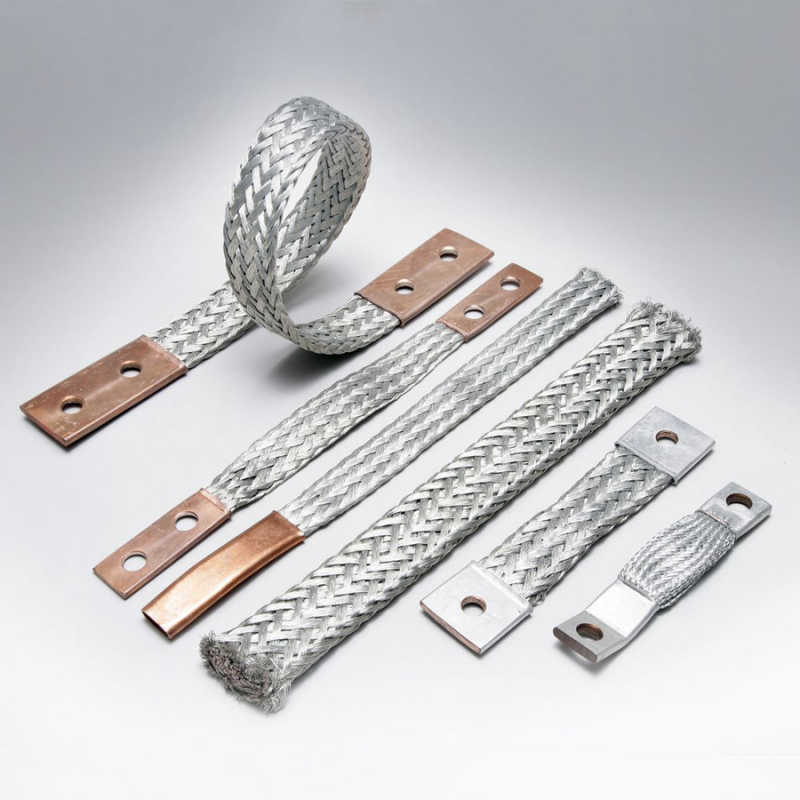
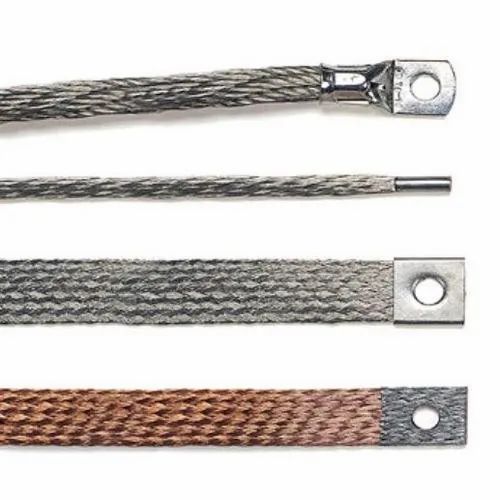
In power transmission and equipment connections, copper braided wires are widely used in industrial equipment and new energy products due to their excellent flexibility, bendability and electrical conductivity. Many people: since copper braided wires can conduct electricity on their own, why are their two ends crimped with copper tubes? This is not redundant, but a scientific choice that balances safety, efficiency and durability. It addresses the inherent drawbacks of copper braided wires and ensures more stable power connections.
I. The Strengths of Copper Braided Wires Are Their Weaknesses
Copper braided wires are woven from multiple strands of fine copper wires with a high braiding density. Their core advantage is exceptional flexibility, small bending radius, adaptability to narrow spaces and vibration-prone environments, and outstanding heat dissipation—with higher current-carrying capacity than single-strand copper wires of the same cross-sectional area. However, the multi-strand structure brings shortcomings: unstable contact (high resistance, easy heating/oxidation), poor tensile strength (prone to strand breakage), and rapid oxidation of fine copper strands.
Copper tubes act as a "fixator + protective cover", compacting loose strands into an integrated whole to solve these drawbacks while retaining flexibility and heat dissipation, improving connection reliability.
II. Core Functions of Crimping Copper Tubes
Crimping copper tubes of copper braideds is not merely for shaping; its functions last throughout the service life, summarized into three key points:
1. Reduce Contact Resistance and Power Loss
Uncrimped loose strands lead to limited contact area and high resistance. Cold crimping achieves tight surface contact, increasing contact area and reducing gaps. Industry tests show standardized crimping reduces contact resistance by over 30%, cutting power loss in high-current transmission.
2. Enhance Structural Strength and Prevent Strand Breakage
Copper braided wires lack structural strength; crimped copper tubes fix strands firmly, disperse external forces, boost tensile/vibration resistance, and protect strands from scratches. For example, in new energy vehicle battery connections, they withstand extreme temperatures and vibration, avoiding power interruptions.
3. Isolate External Environment and Prevent Oxidation
Copper strands oxidize easily in harsh environments (humidity, salt spray), impairing conductivity. Copper tubes isolate impurities to slow oxidation; tin-plated/silver-plated tubes further enhance conductivity and corrosion resistance, suitable for outdoor photovoltaic stations.
III. Key Requirements for Copper Tube Crimping
Copper tube material (mainstream pure copper) and specifications must match the braided wire; crimping pressure must be controlled (excessive breaks strands, insufficient causes poor contact). Surface treatment should suit the scenario (tin/silver plating for corrosion), and strands must be cleaned of oxide/dust before crimping.
IV. Scenario Application Tests
1. New Energy Vehicles
Ensures stable high-current transmission and resists vibration/temperature changes, adopted by mainstream manufacturers.
2. Industrial Equipment
Reduces losses and failures for transformers/frequency converters, extending service life.
3. Outdoor/Harsh Environments
Resists corrosion, ensuring stable conductivity for photovoltaic/marine equipment and lowering maintenance costs.
4. Precision Electronics
Copper tubes shield electromagnetic interference, ensuring stable power/signal transmission for medical/communication equipment.
V. Clarification of Common Misconceptions
Misconception 1: Crimping is for appearance only
It is critical for safety in high-current/complex conditions, improving conductivity and stability.
Misconception 2: Tighter is better
Moderate pressure is needed; excessive breaks strands, insufficient causes poor contact.
Misconception 3: One copper tube fits all scenarios
Requirements vary—corrosion needs tin/silver plating, high-current needs thicker tubes.
Misconception 4: Crimping is maintenance-free
Regular inspection is needed to avoid loosening/oxidation from vibration/temperature changes.
VI. Key Takeaways
With the development of high-power, integrated power equipment, copper tube crimping is increasingly important. Selecting the right tubes and standardized operation avoid hazards and unlock core value. YIPU Metal welcomes your inquiries.